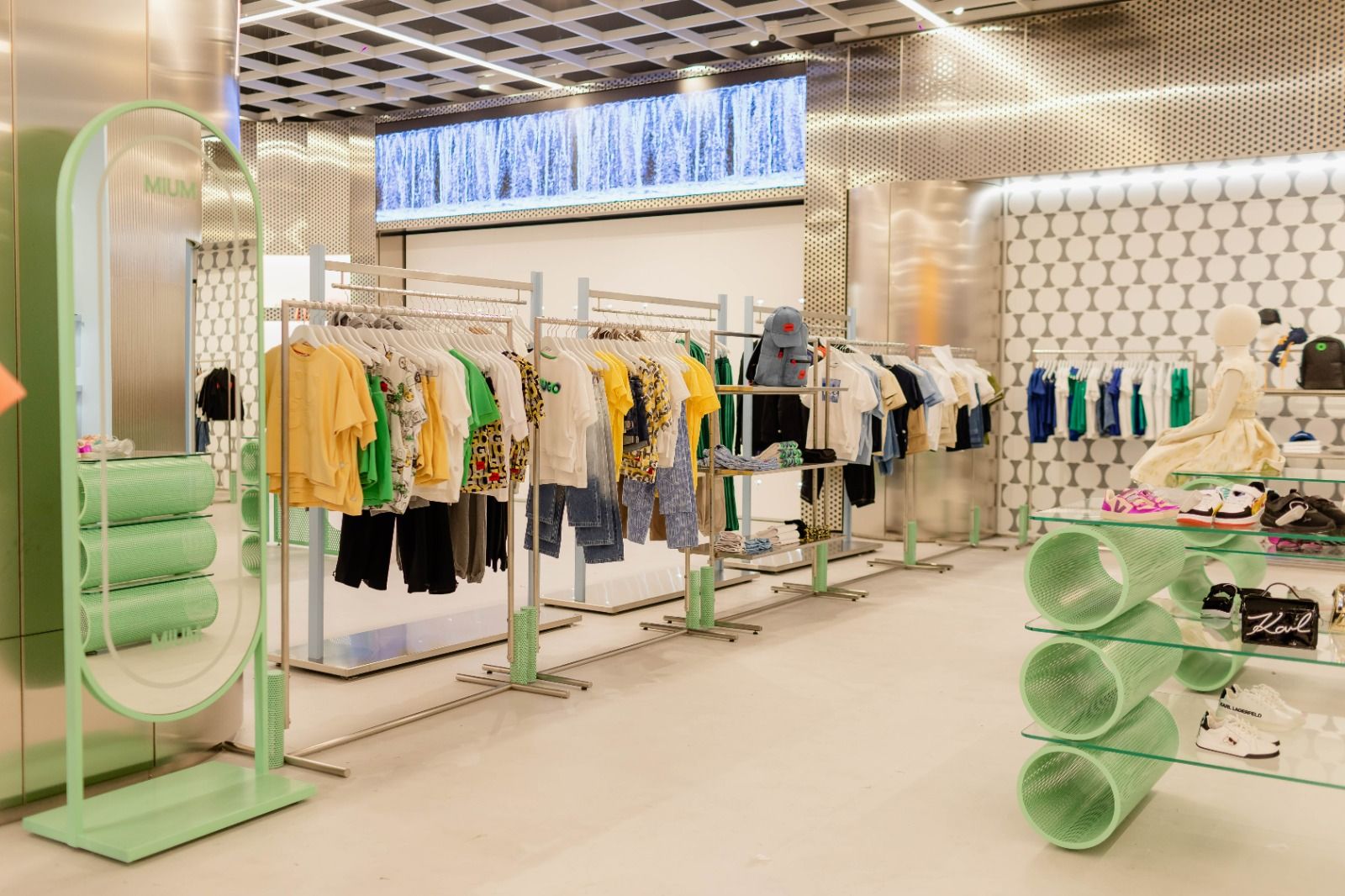
How lighting changes the way, we experience a space.
Lighting is one of those things you don’t always notice when it’s right. But you notice when it’s wrong. We’ve all been somewhere with lighting that just feels off, whether that’s a restaurant so bright you feel like you’re sitting in a waiting room or maybe a shop where you can’t quite see the product properly. Or my personal favourite… a beautifully designed space completely washed out by one very enthusiastic ceiling light! Lighting can change how we see colour, materials and finishes, people and even the size of a space. But more importantly, it changes how a space makes us feel. With the way people are continuously changing how they interact in spaces, this feels more crucial than ever.
As a designer, lighting is something I think about from the very beginning of a concept. Not as something we add at the end once everything else has been designed, but as part of the design itself. It’s about more than being able to see, obviously, lighting has a practical job to do. We need enough light to see where we’re going, read a menu, look at a product, work safely or find what we need. But that’s really only the starting point.

Lighting can create warmth, drama, energy, intimacy and focus.
It can encourage you to look at something, draw you further into a space or make a large room feel much more intimate. Think about a restaurant at lunchtime compared with the same restaurant in the evening. Same tables. Same chairs. Same walls. But change the lighting and suddenly it can feel like a completely different place, that’s what I find so interesting about it, not everything needs to be lit, I think one of the biggest misconceptions with lighting is that we need to light everything. We don’t, in fact, sometimes the darker areas are just as important as the lighter ones, because contrast creates interest.
If every surface is illuminated to the same level, the space can start to feel quite flat. But by layering light and choosing what we want to highlight, we can create depth and naturally direct attention. Maybe it’s artwork on a wall, a beautiful material, a product display, the bar, a table, or simply a pool of warm light that makes you want to sit underneath it. Sometimes it’s as much about deciding what not to light as what to light.
Colour changes under different light.
I touched on this in another article about colour, because the two are so closely connected. You can spend hours choosing the perfect shade from a sample and then put it under the wrong lighting and wonder where your beautiful colour has gone! A warm timber can suddenly look grey, a soft neutral can become yellow, a rich blue can feel much cooler than you intended. And materials react differently too, metal reflects light, textured surfaces create shadow., glass can glow, matt finishes absorb light in a completely different way to something polished or glossy. This is why, for me, you can’t really consider your material palette and your lighting separately. They need to have a conversation with each other.
Then there’s the actual light fitting, and this is where lighting becomes part of the personality of a space. Sometimes the fitting itself is the feature, a large pendant can become a focal point. A row of smaller lights can create rhythm, and decorative wall lights can add character to what would otherwise be quite a simple wall. Other times, I don’t want you to notice the fitting at all, I just want you to notice what it’s lighting. That balance between decorative and architectural lighting is something I really enjoy working with. Not every light needs to make a statement, if everything is a feature, nothing really is.
Good lighting should work for the people using the space too, this is the part that goes beyond creating a nice visual. At RDS 360, we’re always looking at design from both the customer and operational point of view. Where does the team need light to work? Can they see properly behind the counter? Can a customer comfortably read the menu? Are we creating glare on screens? Are there awkward shadows? And, particularly in retail, are we showing the product in the best possible way? Because there’s very little point creating a beautifully atmospheric space if nobody can see what they’re buying!

The best lighting schemes find a balance between atmosphere and practicality.
Lighting can change throughout the day, and I think this is particularly important in spaces that operate from morning through to evening. What feels right at 9am might feel completely wrong at 9pm. During the day, you may have lots of natural light coming through the windows and want the space to feel fresh and energetic. As the day moves into evening, the lighting can become warmer, softer and more intimate. The interior hasn’t changed, but the experience has and that transition can have a huge impact on how customers use and respond to a space.
For me, lighting is about feeling, when we present a design, people naturally focus on the things they can immediately see., this being the furniture, the colours, the finishes, the graphics. Lighting can sometimes sit quietly in the background. But take it away or get it wrong, and suddenly everything else feels different.
Good lighting supports the design without fighting it. It highlights the things we want people to notice, helps people understand the space and creates the atmosphere we want them to experience. And just like colour, I don’t think customers necessarily need to know why a space feels good. They probably aren’t going to finish dinner and say, “The layering of ambient and accent lighting was excellent.” Well… unless they’re a designer at RDS. They’ll just know they enjoyed being there. And ultimately, that’s what good lighting should do.